 1 Nov 2026
 8 min read
Morocco’s mountains are a varied chain of ranges, from the high peaks and deep valleys of the Atlas to the wooded plateaux of the Middle Atlas, the rugged Rif and the drier Anti-Atlas. For a first visit, the key choice is not simply which range to see, but how much time, travel and walking you want to include.
The High Atlas is the most practical mountain region to consider from Marrakech, while the Middle Atlas, Rif and Anti-Atlas offer different scenery and may suit a wider itinerary. Before choosing a route, compare its duration, walking demands, transport arrangements and what is included.
Where Morocco’s mountain ranges are
The main mountains in Morocco form several distinct regions. The Rif lies in the north; the Middle Atlas stretches through the country’s central interior; the High Atlas runs across the south-central area; and the Anti-Atlas lies farther south, beyond the High Atlas. Together, they create a striking change in scenery across the country.
The High Atlas is the range many Marrakech visitors have in mind when they search for the morocco high atlas mountains. It rises south of the city and includes Morocco’s highest peaks. The Middle Atlas is farther north and is known for forests, open plateaux and lakes. The Rif, in the north, has steep, rugged terrain, while the Anti-Atlas is generally drier and rockier.
These locations matter when planning. A day trip from Marrakech is more naturally focused on the High Atlas than on the northern Rif or central Middle Atlas. If you are comparing a morocco atlas mountains tour, check the named destination and route rather than relying on “Atlas” in the description: the Atlas is not one single landscape or a guarantee of a particular experience.

How the Atlas ranges and Anti-Atlas differ
The ranges differ in altitude, vegetation and the kinds of journeys they suit. The High Atlas is the choice for dramatic high-mountain scenery; the Middle Atlas offers a more wooded, open landscape; and the Rif and Anti-Atlas provide contrasting northern and southern settings. The weather varies as well, so a general forecast for Morocco may not reflect conditions at a mountain destination.
The High Atlas: high peaks and deep valleys
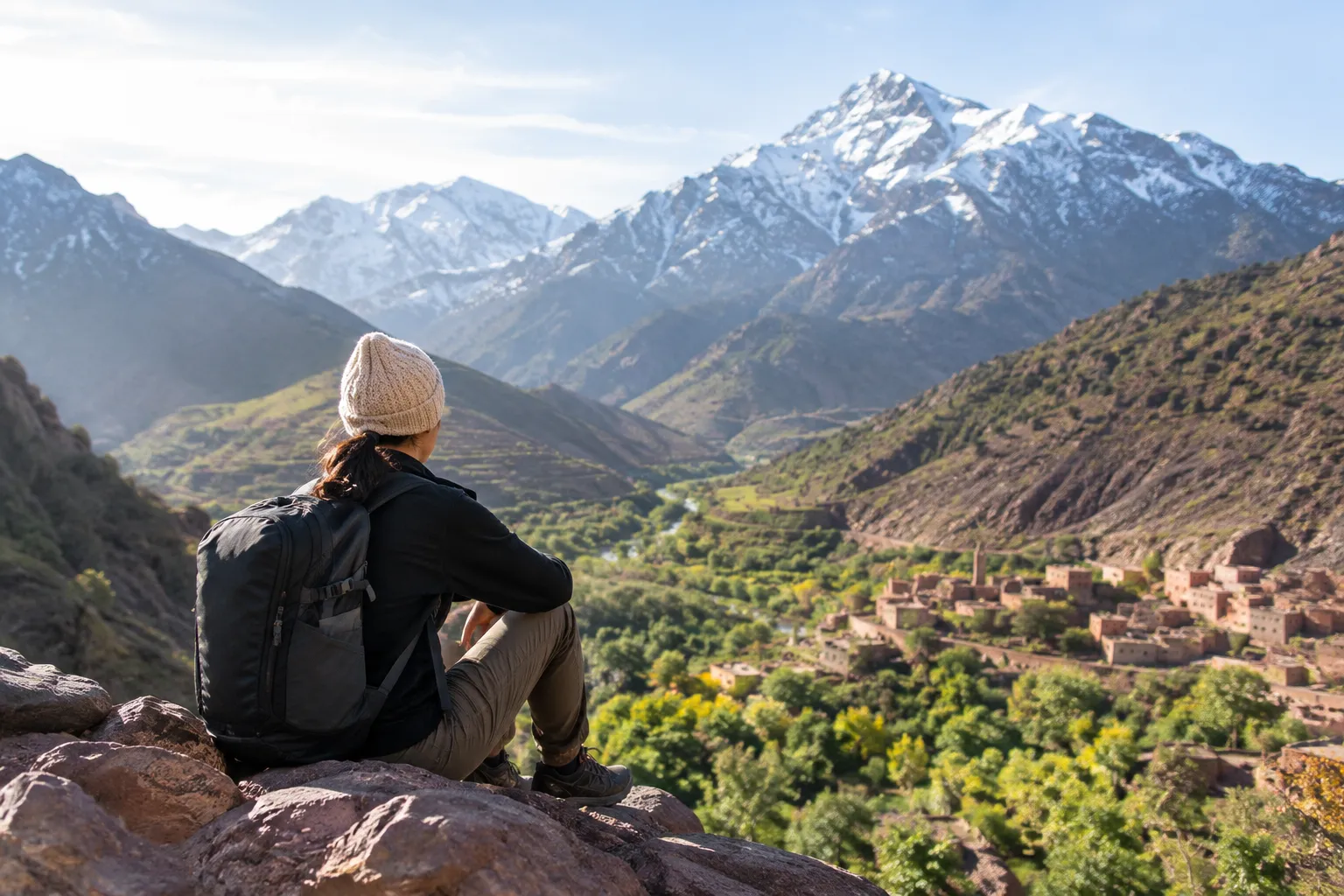
The High Atlas has Morocco’s highest elevations, with steep slopes, deep valleys and settlements in mountain landscapes. For visitors, that means views and terrain can change considerably over a relatively short distance. A route that involves village visits or a valley walk is not necessarily the same as a high-altitude trek.
The area is especially relevant if you are staying in Marrakech and want to add mountain scenery to a city-focused itinerary. It can be a practical introduction to the mountains, but “near Marrakech” does not mean every excursion is short, easy or suitable for everyone. Confirm how much time is spent travelling, walking and stopping, and ask what level of exertion to expect.
The Middle Atlas: forests, plateaux and lakes
The Middle Atlas is a different proposition from the high, rugged scenery of the High Atlas. Its forests, plateaux and lakes create a broader, greener landscape, with less emphasis on dramatic high peaks. It can suit travellers whose plans already include central Morocco and who want a mountain region beyond the Marrakech area.
When comparing destinations, consider the wider itinerary as well as the scenery. The Middle Atlas may make more sense as part of a route through central Morocco than as an add-on to a short stay in Marrakech. Check the journey time from your accommodation and whether the excursion is designed around walking, viewpoints or other stops.
The Rif and Anti-Atlas: northern and southern contrasts
The Rif’s rugged northern scenery contrasts with the Anti-Atlas’s drier, rocky landscapes in the south. These ranges help explain why “mountains in Morocco” can describe very different travel experiences: a forested or rugged northern setting is not interchangeable with a dry southern mountain landscape.
The right choice depends on where you are travelling and what you want to see. If your trip centres on Marrakech, the High Atlas is usually the most relevant range to research first. If you are travelling across other parts of Morocco, compare the added journey time with the landscape you hope to experience.
Mountain routes and experiences in Morocco
Mountain visits range from short walks and village outings to demanding, multi-day treks. The route name alone will not tell you how the day works. Before deciding, ask for the approximate time spent travelling and walking, the expected terrain, the planned stops and whether transport or other arrangements are included.
A morocco atlas mountains tour can be a useful option for travellers who want help arranging an excursion, but the word “tour” does not establish its group size, schedule or inclusions. Request those details in writing and compare them against your plans. This is particularly useful if you have limited time or want to avoid an itinerary that moves too quickly.
Walking near Marrakech in the High Atlas
Walks and village excursions in the High Atlas can bring mountain scenery within reach of a Marrakech stay. Their demands vary: the distance, surface, elevation change and pace all affect whether a particular walk suits you. Do not assume that a route is accessible simply because it is described as a day trip.
Ask what the walking involves in practical terms. How long is the walk? Is the ground uneven or steep? How much time is allowed for stops? If you are travelling with children or anyone who has mobility or fitness concerns, describe those needs before booking and check that the proposed route fits.
Planning a Toubkal trek
Mount Toubkal is Morocco’s highest peak, and a trek there requires more preparation than a short mountain outing. Consider the number of days involved, the elevation, the walking demands and how the plan accommodates changing conditions. Confirm the route and arrangements with the organiser rather than assuming a general High Atlas excursion includes a summit attempt.
If you are comparing a morocco atlas mountains tour with a Toubkal trek, treat them as different types of trip. A valley walk may be suitable for a short visit; a high-altitude trek calls for more time and preparation. Ask what experience, equipment and guidance the trek requires, and check current local conditions before setting out. Anyone with a health concern about strenuous activity should consult a qualified healthcare professional about their own circumstances.
Guided mountain routes beyond Morocco
A guided climb elsewhere can provide a useful comparison for the planning questions involved in longer mountain journeys: route, duration, group format and what support is included. For example, Eco Africa Climbing describes guided Mount Kilimanjaro climbs, including private and group expeditions, as well as private Tanzania wildlife safaris. Kilimanjaro is a different destination and undertaking, but its trip descriptions illustrate why it is worth checking the details of any guided route rather than judging by the headline alone.
Weather and seasons in Morocco’s mountains
Morocco Atlas Mountains weather depends on altitude, region and season. Conditions in a mountain valley can differ from those in Marrakech, and higher ground can be colder than lower areas. A sunny forecast for the city is not a reliable substitute for checking the destination and elevation of your planned route.
In general, temperatures tend to be lower at higher elevations, and winter conditions can make high routes more challenging. Lower-altitude walks may be more manageable at times when high trails are cold or affected by snow. Conditions also vary within each range, so ask the organiser which location and elevation the forecast applies to.
Before departure, check a current forecast for the specific destination and ask whether conditions could affect the itinerary. Pack layers that can be added or removed, suitable footwear for the stated terrain, and protection from sun and wind. If the route involves significant elevation or a long walk, confirm what equipment is expected rather than assuming ordinary city clothing will be enough.
Plan a mountain visit from Marrakech
A Marrakech stay can make a High Atlas outing a straightforward addition to a city itinerary, but the overall day includes more than time on foot. Confirm the departure and return arrangements, the estimated travel time, the walk’s length and pace, and the stops included. Ask whether meals, equipment or other services are part of the offer instead of assuming they are.
For reliable planning, keep a written record of the agreed itinerary and check that it matches the description you were given. If group size matters to you, ask how many people are expected and how the schedule is managed. If accommodation is mentioned as part of a wider trip, confirm its type and location before committing.
A mountain excursion is one possible way to broaden a Marrakech visit. Couscous Tour lists Magical marrakesh among its offerings; whether it fits your plans depends on the experience you want and the details of the itinerary. Compare the proposed activity with your available time and ask specific questions about transport, timings, group arrangements and cancellation terms before making a decision.
Respect local customs when visiting villages. Choose modest, practical clothing and ask before photographing people or private spaces. These small steps help keep a village visit considerate, while also giving you a clearer sense of what is appropriate in the places on your route.
Choose a mountain experience that fits your trip
Start with your base and the time available. If you are staying in Marrakech for a short visit, focus your research on the High Atlas and compare the total travel time with the time spent walking or exploring. If your itinerary already takes you through central or northern Morocco, the Middle Atlas or Rif may be a more natural fit. The Anti-Atlas offers a distinct southern landscape, but it should be chosen for its place in your wider route, not simply because it shares the word “Atlas”.
Then match the activity to your expectations. A short walk, a village outing and a Toubkal trek involve different levels of effort and planning. Look for a clear description of the route, realistic timings, group arrangements and inclusions. Read reviews critically, paying attention to comments about organisation and whether the advertised itinerary was delivered. Couscous Tour says it has been well reviewed on TripAdvisor since 2016; as with any review profile, read individual feedback and consider whether it addresses the details that matter to your trip.
Use these steps to narrow your choice:
- Choose the mountain range that fits your location and wider Morocco itinerary.
- Compare the route’s walking demands, travel time, stops and expected duration with your available time and ability.
- Ask the organiser to confirm group size, transport, inclusions and cancellation terms in writing.
- Check a current forecast for the destination and elevation, then pack for the conditions described.
- Compare the confirmed itinerary with your expectations before choosing a Marrakech-focused activity or a longer mountain trek.